
The last time we wrote about dental SEO trends, ranking meant one thing: winning a spot on Google’s first page. In 2026, a growing share of your future patients never see that page at all. They ask Google’s AI Overview, ChatGPT, or Perplexity “who’s the best implant dentist near me?” and get a synthesized answer with three names in it. Either your practice is one of those names, or the conversation is over before your website loads.
The good news: the practices winning in AI search are winning with fundamentals — done more deliberately. This guide covers both layers in depth: the new AI answer economy, and the complete dental SEO playbook underneath it — keywords, architecture, on-page work, local, technical, schema, content, links, and measurement. It is long because it is meant to be your working document for the year.
Trend 1: AI Search Optimization — the New Front Door
What it is
AI search optimization (you will also see it called AEO — answer engine optimization — or GEO, generative engine optimization) is the practice of making your website the source an AI system cites or recommends when it answers a patient’s question. Traditional SEO earns you a ranking; AI optimization earns you a mention in the answer itself. The two overlap heavily — AI systems lean on the same signals Google’s index does — but the emphasis shifts: from keywords toward clear answers, verifiable expertise, and a consistent identity across the web.
For a dental practice this is very concrete. When someone asks an AI assistant about Invisalign costs in your city, the systems assembling that answer are scanning for pages that answer the question directly, from sources whose name, location, specialty, and reputation all corroborate each other. Here are the tactics that are actually moving the needle:
The AI optimization trends that are working
- Answer-shaped content. Write headings as the questions patients ask (“How much does a dental implant cost?”) and follow each with a direct, complete answer in the first two or three sentences — then elaborate. AI systems lift concise, self-contained answers; they skip pages that make the reader hunt.
- Structured data (schema). Mark up your site as a Dentist/LocalBusiness with services, hours, geo, and FAQ schema on question pages. Schema is how machines confirm who you are, what you do, and where — it is the difference between being understood and being guessed at.
- Entity consistency. AI systems cross-check you: your website, Google Business Profile, insurance directories, dental association listings, and social profiles must agree on your practice name, address, phone, and specialties — exactly. Contradictions dilute the machine’s confidence, and low confidence means you get left out of answers.
- Reviews as an AI input. When an AI recommends “a highly rated pediatric dentist,” it is reading review volume, recency, and content. A steady stream of recent, detailed reviews — that mention specific services — feeds both the map pack and the AI answer.
- Real authorship and E-E-A-T. Health content is held to the highest scrutiny. Pages credited to a named dentist with a real bio, credentials, and photo consistently outperform anonymous content — in Google and in AI citations. Every clinical page on your site should have a doctor’s name on it.
- Let the AI crawlers in. Check your robots.txt: many sites block GPTBot, ClaudeBot, and PerplexityBot without knowing it (some security plugins do this by default). If the assistants cannot read your site, they cannot recommend it. An llms.txt file — a plain-language index of your key pages — is an emerging convention worth adding while it is still a differentiator.
- Be the quotable source, not the echo. AI systems already have generic dental content — they were trained on it. What earns citations is what only you have: your case counts, your pricing ranges, your before-and-afters, your take on a procedure. One page of original, specific material beats ten pages of paraphrased WebMD.
- Measure it. Add AI referral tracking to your analytics (traffic from chatgpt.com, perplexity.ai, and AI Overview clicks) and periodically ask the major assistants the questions your patients would. If your competitors come up and you do not, you have found next quarter’s project.
Trend 2: Keyword Strategy — Map Every Dollar to an Intent
Dental search demand sorts into four intent tiers, and each one deserves different pages, different urgency, and different economics. Most practices chase tier 3 blog traffic while leaving tiers 1 and 2 — where the revenue is — to whoever shows up in the map pack.
- Emergency intent — “emergency dentist near me,” “tooth pain relief now,” “broken tooth Saturday.” Highest conversion rate on the web: these patients book within the hour. They need a page that loads instantly, states your emergency availability in the first line, and puts the phone number everywhere.
- Procedure + cost intent — “dental implant cost,” “Invisalign price [city],” “root canal near me.” High-value patients comparison shopping. Won with dedicated procedure pages that answer the money questions honestly (more below).
- Research intent — “root canal vs extraction,” “does teeth whitening damage enamel.” Earlier in the journey; this is blog territory. Its job is not the immediate booking — it is authority, internal links to your procedure pages, and being the source AI answers cite.
- Brand intent — your practice and doctor names. Cheap to win, catastrophic to lose: if a directory or competitor ad outranks you for your own name, fix that before anything else on this list.
Build the map in an afternoon: list every procedure you make money on, pair each with the emergency/cost/comparison phrasings patients use (your front desk already knows them), check what you currently rank for in Google Search Console, and the gaps become your content calendar.
Trend 3: Site Architecture — Hubs, Spokes, and Internal Links
Google infers what you are about from how your pages connect. The structure that keeps winning for dental sites is hub-and-spoke: a hub page for each service family (Implants, Orthodontics, Cosmetic, General), spoke pages for each specific procedure beneath it, and research articles linking up into the spokes they support.
- URLs mirror the hierarchy — /implants/, /implants/all-on-4/, /implants/implant-cost/ — short, readable, keyword-bearing, and never changed without a 301.
- Every page reachable in three clicks from the homepage. If a procedure page is buried five menus deep, both crawlers and patients treat it as unimportant.
- Descriptive internal anchors. Link “see our dental implant cost guide,” not “click here.” Internal links are the one anchor text you fully control — spend them.
- Breadcrumbs on every page (with BreadcrumbList schema) — they clarify structure for crawlers and add a second navigation path for patients.
- Prune orphans. Pages with no internal links pointing at them barely get crawled. Every published page should be linked from at least its hub.
Trend 4: On-Page SEO — the Details That Still Decide Ties
When two practices are otherwise equal, the one with disciplined on-page work wins the ranking. The checklist for every important page:
- Title tag (≈60 characters): procedure + city + practice, front-loaded — “Dental Implants in Austin | Smith Dental.” It is both a ranking factor and your ad copy in the results page.
- Meta description (≈155 characters): not a ranking factor, but it is why people click you instead of the listing above you. Include the differentiator — same-day crowns, Saturday hours, financing.
- One H1 stating the topic; H2s phrased as patient questions; no skipped heading levels. This hierarchy is exactly what AI systems parse for answers.
- First 100 words carry the answer. State what, where, and for whom immediately — for the skimming patient and the quoting machine alike.
- Image alt text that describes (“All-on-4 implant model, upper arch”), real compression, and descriptive filenames — dental sites are image-heavy, which makes this a bigger lever than most industries.
- A named author. “Medically reviewed by Dr. [Name], DDS” with a linked bio page turns a page from anonymous content into accountable health information.
Trend 5: Local SEO — the Map Pack Is Still Where the Phone Rings
Local rankings run on three factors: relevance (do your profile and site clearly say what you do), proximity (how close you are to the searcher — the one you cannot change), and prominence (reviews, links, mentions, and engagement). Since proximity is fixed, your entire local strategy is maximizing the other two:
- Google Business Profile, fully worked — correct primary category, every service listed, monthly photos, seeded Q&A, posts. We published the exact checklist in our new-patients playbook.
- Citation consistency — identical name, address, phone across Yelp, Healthgrades, Zocdoc, insurance directories, and the ADA/state association listings. Sweep for old addresses and tracking numbers once a year; inconsistencies quietly cap your prominence.
- A real location page — embedded map, parking directions, photos of the actual office, staff, hours, insurance list, and localized copy. This is the page your profile links to; it should feel like arriving.
- Multi-location groups: one page and one profile per location, each with its own reviews and photos — never one corporate page trying to rank everywhere. Google ranks locations, not brands.
Trend 6: Procedure and Cost Pages Win Twice
“Dental implant cost,” “root canal vs extraction,” “Invisalign vs braces” — these queries carry the most valuable patients, and in 2026 the pages that answer them win twice: once as a Google ranking, once as the source behind an AI answer. Every revenue procedure deserves its own page with a direct cost discussion. Practices resist publishing prices; the ones that publish honest ranges keep taking patients from the ones that stay silent.
Trend 7: Technical SEO — the Invisible Layer That Caps Everything
No amount of content overcomes a site Google struggles to crawl, render, or trust. The technical layer is unglamorous, which is why auditing it is usually the fastest win available:
- Index hygiene. Open Search Console’s page-indexing report. Pages you care about marked “crawled, not indexed” signal thin or duplicated content; important pages accidentally set to noindex happen more often than anyone admits.
- Redirect hygiene. Every old URL should 301 once, directly, to a live page — no chains, no redirects to pages that no longer exist. Broken and chained redirects bleed authority invisibly. (We recently audited our own and found years of accumulated dead ends — every site drifts; schedule the audit annually.)
- Core Web Vitals with numbers: LCP under 2.5s (your hero image, usually — compress it, preload it), INP under 200ms (defer the script bloat), CLS under 0.1 (reserve space for images and embeds so the page doesn’t jump under the patient’s thumb).
- Modern images: WebP/AVIF formats, responsive sizes, lazy-loading below the fold — on an image-heavy dental site this alone can halve load time.
- One canonical version of every URL (https, one host, consistent trailing slash), an XML sitemap that contains only live, indexable pages, and a robots.txt that blocks admin paths — not your AI crawlers.
- Mobile is the index. Google evaluates the phone version of your site, full stop. If content is hidden or broken on mobile, it does not exist.
Trend 8: Schema — Speak Machine, Fluently
Structured data is how you state facts about your practice in a form machines trust. For a dental site, the stack worth implementing (as JSON-LD) is:
- Dentist / LocalBusiness on the homepage and location pages — name, address, phone, geo, hours, price range, the profiles that corroborate you (sameAs).
- Person for each doctor — credentials, specialty, education — linked from their bio page. This is E-E-A-T made machine-readable.
- FAQPage on procedure pages carrying real questions and answers — the exact material AI answers are assembled from.
- BreadcrumbList site-wide, matching your architecture.
- Validate everything in Google’s Rich Results Test after every site change — broken schema is worse than none.
Trend 9: Content Strategy — Fewer Pages, Heavier Pages
The volume era is over; the helpful-content era rewards depth and maintenance. What works now: topic clusters (one strong research article supporting each procedure spoke, interlinked), a refresh cadence (updating your ten most important pages annually beats publishing forty new thin ones — this very post replacing our 2021 edition is the pattern), cost and comparison content patients actually search, and original material — your photos, your case numbers, your doctors’ opinions — because generic content is now free, and priced accordingly by every algorithm that matters.
Trend 10: Links and Authority — Local Beats Volume
Backlinks still matter, but for a dental practice ten relevant local links outweigh a hundred generic ones. The ones worth pursuing, roughly in order of effort-to-value: your ADA and state/county dental society profiles (authoritative, cheap, often forgotten), local sponsorships that come with a link — youth sports, school events, charity 5Ks — local news quotes (position a doctor as the go-to dental expert for local media), insurance and supplier directories, and genuinely useful community content that earns links on its own. What to refuse: purchased link packages, private blog networks, and reciprocal link swaps — in a health niche, Google’s spam systems treat these as a character judgment.
Trend 11: Review Velocity Beats Review Count
Both patients and algorithms now weigh recency over totals: thirty fresh reviews in the last quarter outperform three hundred from 2022. The practices winning this trend run review requests as a system — a same-day text to every satisfied patient — rather than a once-a-year push. (The exact script we recommend, and the HIPAA-safe way to respond, are in the new-patients playbook.)
Trend 12: Distinct Design as an Engagement Signal
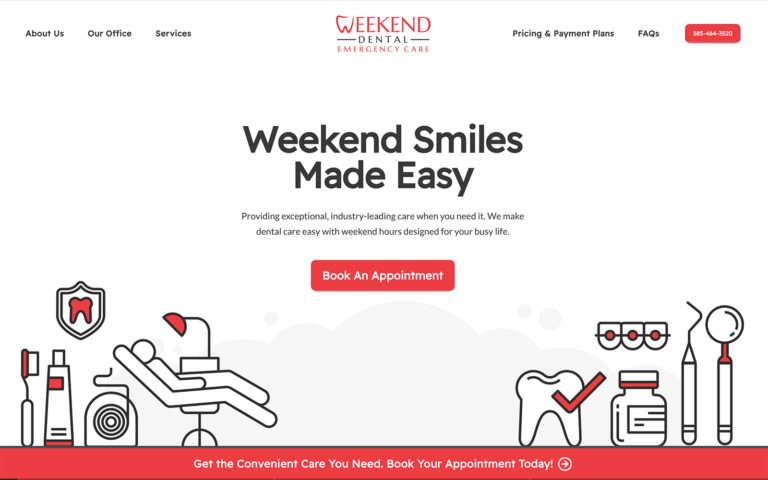
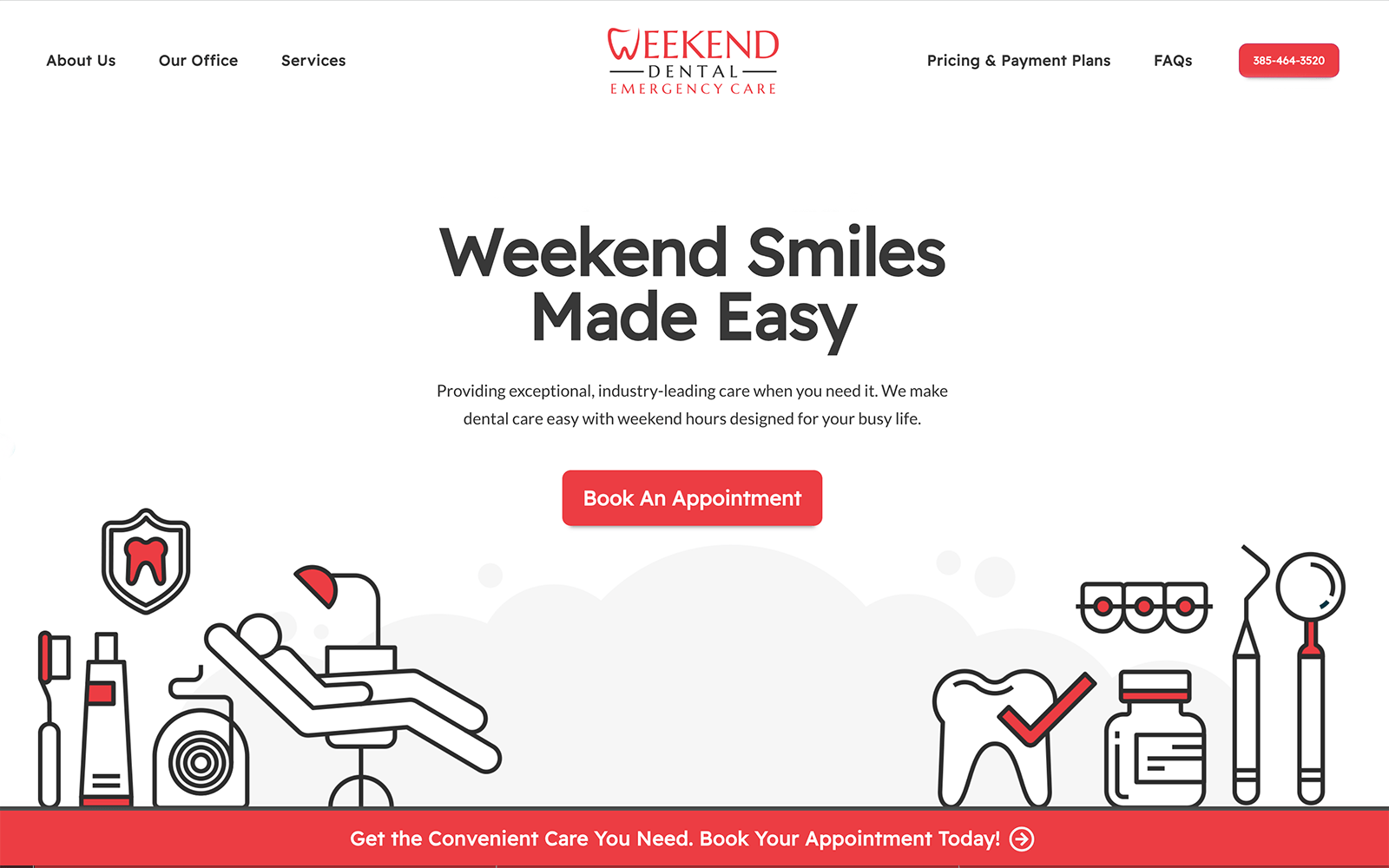
Search engines watch what patients do after the click. A site that looks like every other dental template gets the back-button; a site with a distinct identity holds attention, earns the second pageview, and collects the branded searches (“windham kids dentist”) that both Google and AI systems read as reputation. Design is not decoration in 2026 — it is a measurable search signal, and it is why we treat design and SEO as one discipline in our Ultimate Guide to Medical Website Design.
What Stopped Working
- City-page spam — near-identical “dentist in [suburb]” pages for every town in the county. Google’s spam systems now collapse or penalize these; one strong location page beats twenty thin ones.
- Bulk AI-generated blogs. Publishing fifty generic AI-written posts is the fastest way to look like every other site the models trained on — and Google’s helpful-content systems demote it. Fewer pages, more of what only your practice knows.
- Keyword stuffing and exact-match anchors — machine-readable in the worst way. Modern systems understand meaning; write for the patient.
- Set-and-forget SEO. A site “optimized once” in 2021 has been passed by everyone who kept publishing, kept earning reviews, and kept their profile current. SEO in 2026 is a cadence, not a project.
Measurement: the Numbers That Decide Next Month’s Work
Free tooling covers a dental practice completely: Google Search Console for queries, rankings, clicks, and index health; GA4 for what visitors do after arriving (watch AI referral sources here); call tracking so phone bookings — still most dental conversions — attribute to the page and channel that produced them; and your Business Profile’s own metrics for calls and direction requests. Review monthly against one primary KPI — new-patient inquiries per channel — and let everything else be diagnostic.
The 90-Day Dental SEO Plan
- Days 1–30 — audit and foundations: Search Console index report; redirect and 404 sweep; Core Web Vitals baseline; citation consistency pass; GBP checklist; robots.txt AI-crawler check; ask ChatGPT/Perplexity/Google the five questions your patients would and record who gets named.
- Days 31–60 — build: keyword map by intent tier; rebuild your top three procedure pages (question headings, direct answers, honest cost ranges, named-dentist bylines, FAQ schema); publish doctor bio pages with Person schema; launch the same-day review-request system.
- Days 61–90 — authority and iteration: claim dental-association profiles; land two local links (sponsorship, news quote); refresh your two most-trafficked older posts; re-run the AI assistant test and the Vitals scan; compare new-patient inquiries per channel against the day-1 baseline and set the next quarter from what moved.
If you would rather have this run for you — the audit, the procedure pages, the technical fixes, the AI-readiness work — that is exactly what our dental marketing service does. Or schedule a consultation and we will ask the AI assistants about your practice together, live.